Hand strength and dexterity are easy to lose — after a stroke, with arthritis, or following a hand injury or surgery — and slow to rebuild. A hand exercise machine can support consistent, structured daily practice. But the term "hand exercise machine" covers everything from simple grip rings to clinical-grade robotic rehabilitation gloves, and the right choice depends on why your hand needs work and how much active movement you still have.
This guide compares the 7 main types of hand exercise equipment, what each is good (and not good) for, and how to match a device to your situation. Outcomes vary by individual, so treat this as a starting point for a conversation with a rehabilitation professional rather than medical advice.
| Device type | Best for | Active assistance? | Data / programs | Typical setting |
|---|---|---|---|---|
| Grip strengthener | Grip strength (healthy hand) | No | No | Home |
| Therapy putty | Arthritis, early strengthening | No | No | Home |
| Finger exerciser board | Finger isolation, dexterity | No | No | Home |
| Resistance / extensor band | Opening motion, balance | No | No | Home / clinic |
| CPM / powered rotor | Post-surgical range of motion | Passive only | Limited | Clinic |
| FES / EMS / TENS | Very weak / paralyzed, pain | Stimulation | Some | Home / clinic |
| Robotic rehab glove | Stroke / neuro recovery | Yes — assists grasp | Yes (reps, modes) | Home & clinic |
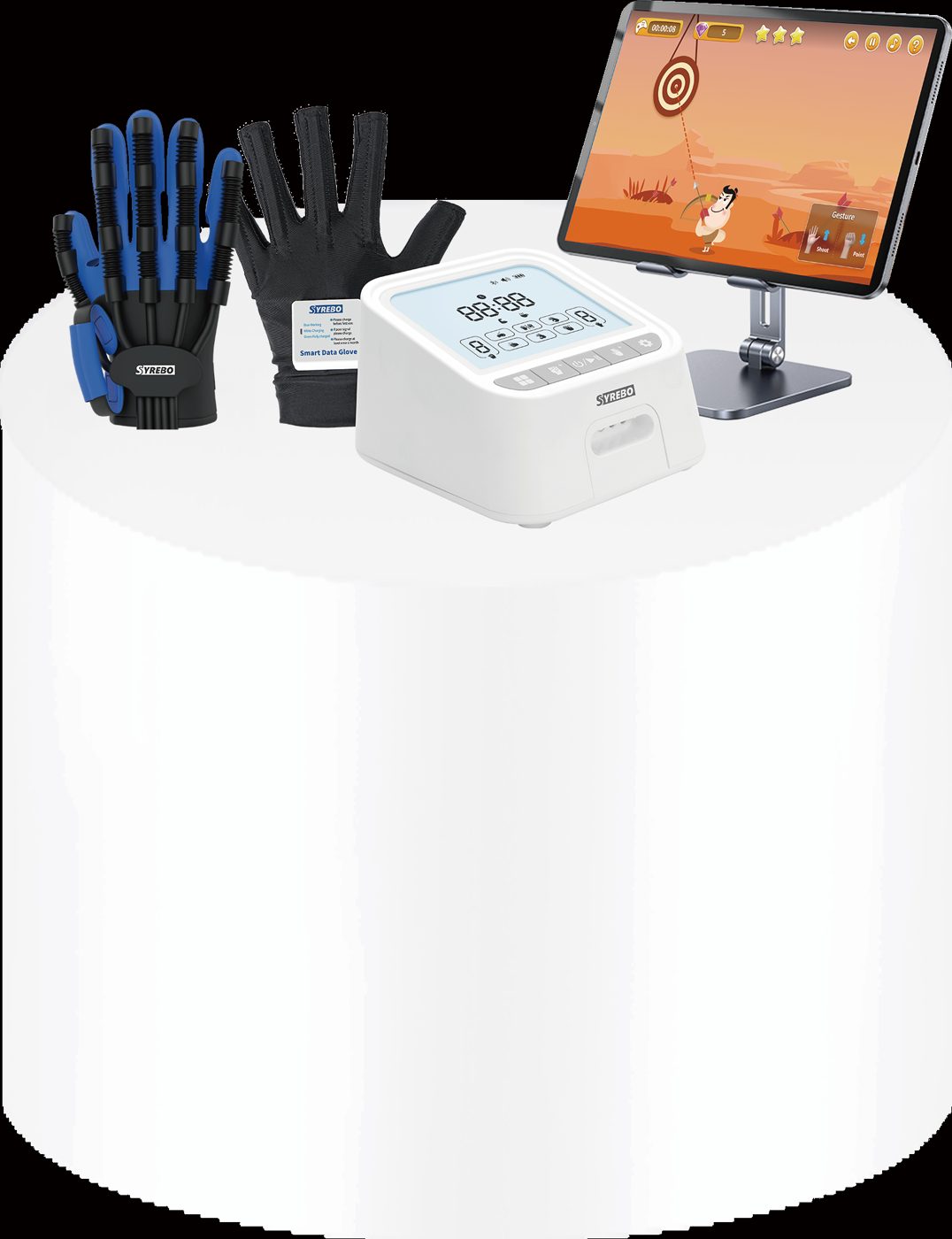
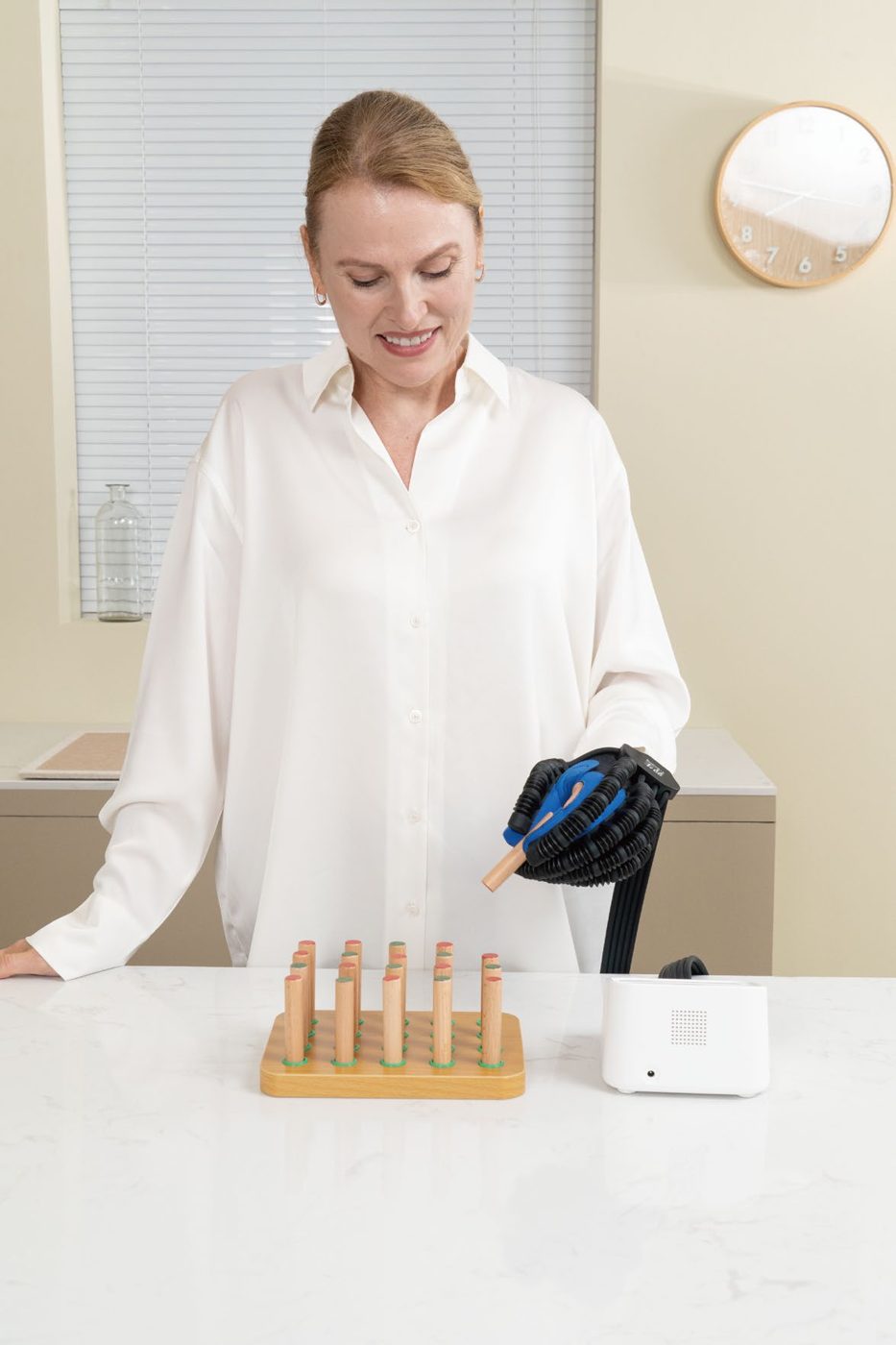
Syrebo builds soft robotic hand rehabilitation gloves for exactly the hardest case — a hand that is weak, stiff, or cannot open after a stroke. The glove gently assists the fingers through grasp-and-release for hundreds of guided repetitions a day, at home, with therapist-set modes. It is designed to support structured practice as part of a rehabilitation plan; results vary by individual and use should be guided by a professional. Explore our rehabilitation equipment for home and our rehabilitation system for clinic to see where a robotic glove fits alongside other tools.
If the hand is weak or cannot move on its own, a robotic rehabilitation glove is usually the best fit because it actively assists the hand through grasp-and-release — simple grippers or putty only help hands that can already move. Many people combine a robotic glove for active practice with putty for extra strengthening. The right choice varies by individual, so ask a rehabilitation professional what is appropriate for your situation.
They can support structured, repetitive practice, which is an important part of hand rehabilitation. Outcomes vary by condition, device, training plan, and how consistently the device is used. A rehabilitation professional can help determine whether a device is appropriate and how it should be used.
Some people use graded therapy putty or light finger exercisers and resistance bands, but painful or inflamed joints require care. Ask a clinician or therapist which resistance level and range of movement are appropriate before starting, as this varies by individual.
A grip strengthener builds squeeze strength in a healthy or mildly weak hand. A robotic glove is for a hand that cannot reliably open and close on its own — it assists the motion. They solve different problems, so the answer depends on how much active movement your hand still has.
Many devices are designed for home use, but the appropriate device and training plan depend on the user's condition. For neurological rehabilitation, follow the guidance of a rehabilitation professional and review progress regularly.
Not sure which hand rehab device fits your recovery? Tell us about the hand and we will recommend the right approach, with no obligation. Get expert advice.