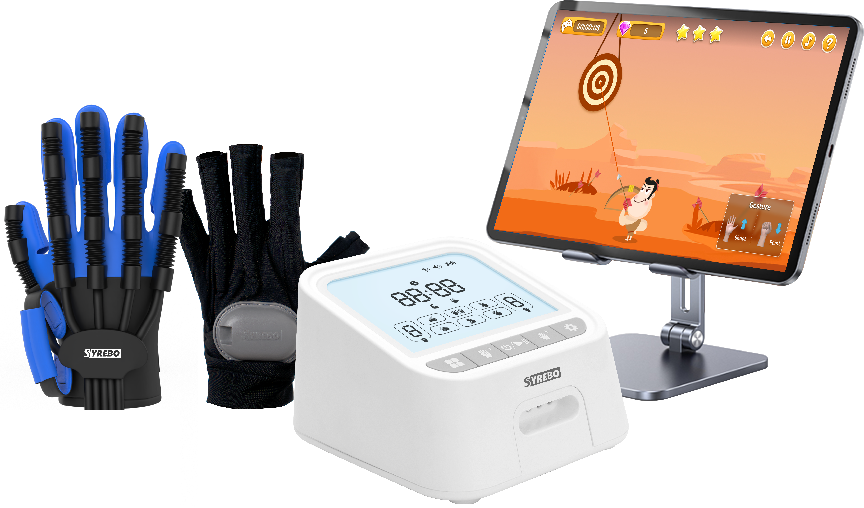
Search for “hand massager” and “hand rehabilitation robot” and you will see the same kinds of devices come up — gloves, machines, and gadgets that wrap around a tired or weak hand. It is easy to assume they are interchangeable. They are not.
A hand massager is mainly a comfort device: it kneads, compresses, warms, or vibrates the hand and fingers. A hand rehabilitation robot is a training device: it assists the fingers through grasp-and-release movements for structured practice after a stroke or other neurological injury.
One is mainly designed for short-term comfort. The other supports structured movement practice. This guide explains the difference in plain language, when each type may be appropriate, and what to discuss with a rehabilitation professional before choosing a device.
The simplest way to keep these two apart is to ask what the device is trying to do.
That distinction — passive comfort versus active, repetition-based practice — is the core difference. Intended user, movement assistance, session tracking, and professional guidance are the practical factors that follow from it.
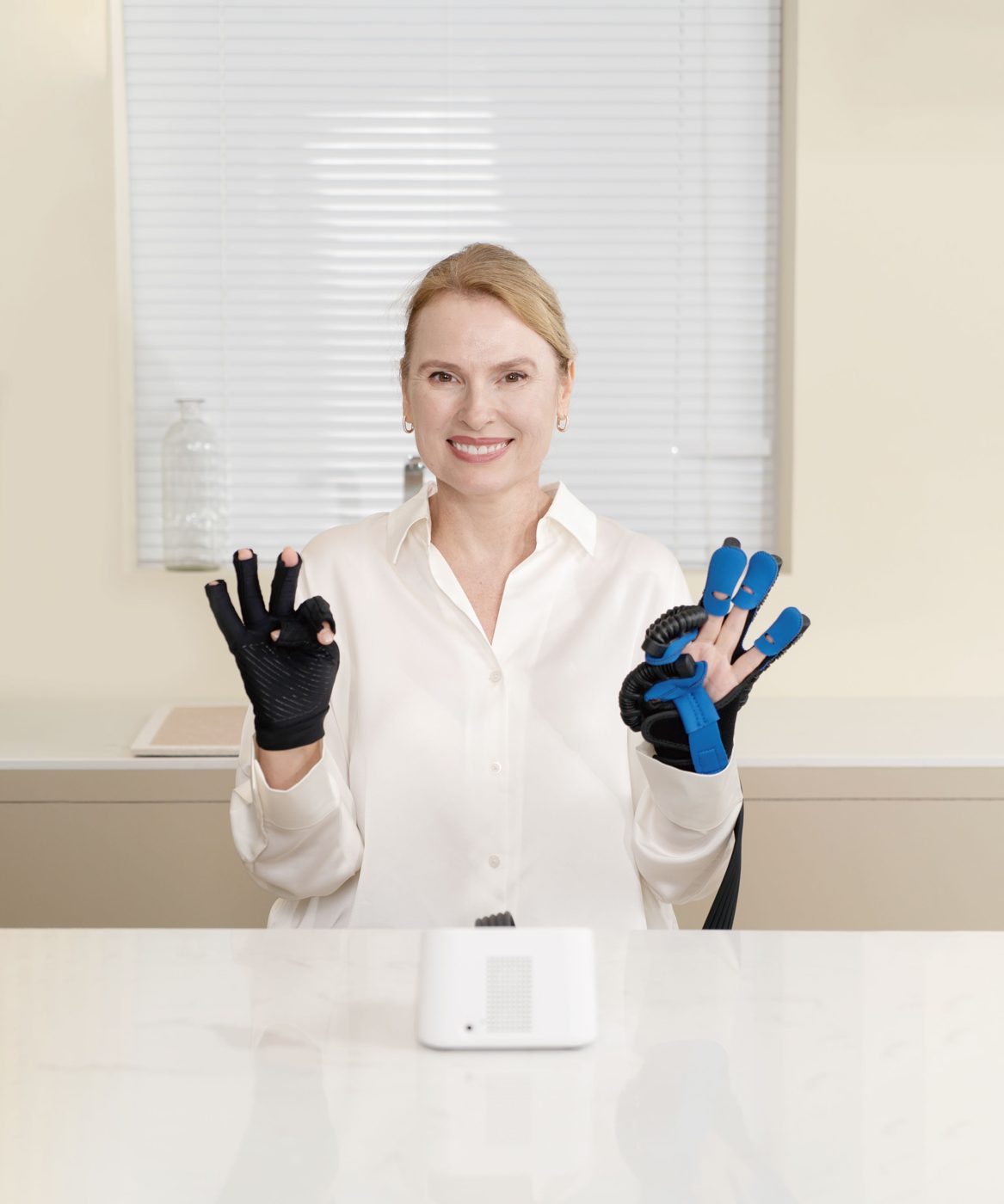
A hand massager is a good fit when your goal is comfort and circulation, not recovering lost movement. Common situations include:
If your hand already moves reasonably well and you mainly want it to feel looser and more comfortable, a massager may be all you need. Just be clear about what it does: it manages how the hand feels, not what the hand can do. Comfort is a real benefit, but on its own, passive massage is not a substitute for movement practice when the goal is regaining function. Needs vary by individual, so consult a professional if you are unsure.
A hand rehabilitation robot may be considered when the goal shifts from comfort to assisted movement practice — for example, after a stroke or another neurological event that has left the hand weak, stiff, or unable to open and close on its own. A rehabilitation professional should assess whether this type of device is appropriate.
This is the category that actively moves the hand for you while you practise, so the movement is completed even when the muscles cannot do it alone. A massager cannot do this — kneading a hand that cannot open does not teach it to open. When the goal is motor recovery, active, repeated, functional movement is the point, and that is what a rehabilitation robot is built to support. Individual results vary; always follow your professional’s guidance.
| Hand massager | Hand rehabilitation robot |
Mechanism | Kneading, compression, vibration, sometimes heat — applied to the hand | Powered glove that drives the fingers through grasp-and-release |
What it’s for | Relaxation, circulation, easing stiffness | Practising and supporting hand movement and function |
Active assistance? | No — the hand stays passive | Yes — assists the fingers through the motion |
Who it’s for | Tired, stiff, or achy hands that still move | Weak or non-moving hands after stroke or neurological injury |
Data / programs | Usually none (comfort settings only) | Repetition counts, modes, therapist-adjustable programs |
Typical setting | Home, self-care | Home and clinic |
These devices are not rivals; they solve different problems, so many people benefit from both. A practical combined routine after a stroke often looks like this:
The massager may make training more comfortable; the rehabilitation robot does the movement-practice work. Some households buy them separately; some devices combine massage and training functions. Either way, the principle holds: use the massager for comfort, and the rehabilitation robot for practising movement, and do not expect the massager alone to do the second job.
Start from your goal, not the gadget. If the hand still moves and you want relief from stiffness or fatigue, look at comfort features, fit, and pressure and heat settings on a massager. If the hand is weak or cannot open and close on its own, look at movement assistance, glove fit, training modes, and how well the device fits into a plan set by a professional. When recovery of function is the aim, bring a rehabilitation professional into the decision before you buy — the right choice varies by individual.
Where Syrebo fits. Syrebo builds soft robotic hand rehabilitation gloves for the harder case — a hand that is weak, stiff, or cannot open after a stroke. The glove gently assists the fingers through grasp-and-release for many guided repetitions a day, at home, with therapist-set modes. For comfort-and-circulation needs, Syrebo also offers a multi-mode electric hand massager, so a single household can cover both jobs. You can explore the home option on our rehabilitation equipment for home page.
No. A hand massager applies pressure, vibration, or heat to relax the hand and support circulation, and the hand stays mostly passive. A hand rehabilitation robot actively assists your fingers through grasp-and-release to support movement practice. One is mainly for comfort; the other is for practicing hand movement. Which is appropriate varies by individual, so consult a rehabilitation professional.
A massager may ease stiffness and feel soothing, which many stroke survivors appreciate, but passive massage does not retrain movement. Regaining hand function generally depends on repeated, active practice of the movement, which is what a hand rehabilitation robot is designed to support. Massage can support comfort alongside that training rather than replace it. Outcomes vary by individual; consult a professional.
If your hand still moves and you mainly want it to feel looser and more comfortable, a massager may be enough. If the hand is weak or cannot reliably open and close on its own, for example after a stroke, a device that actively assists the movement may be more appropriate. A rehabilitation professional can help you decide based on your situation.
Yes. A common approach is to use the massager to warm up and cool down, and the rehabilitation robot for the grasp-and-release practice in between. They serve different purposes and can work well as a pair. Discuss a routine that fits your needs with your therapist.
Not sure whether you need a massager or a rehabilitation robot? Tell us about the hand and your recovery goal, and we will help point you to the right device — no obligation. Get expert advice.