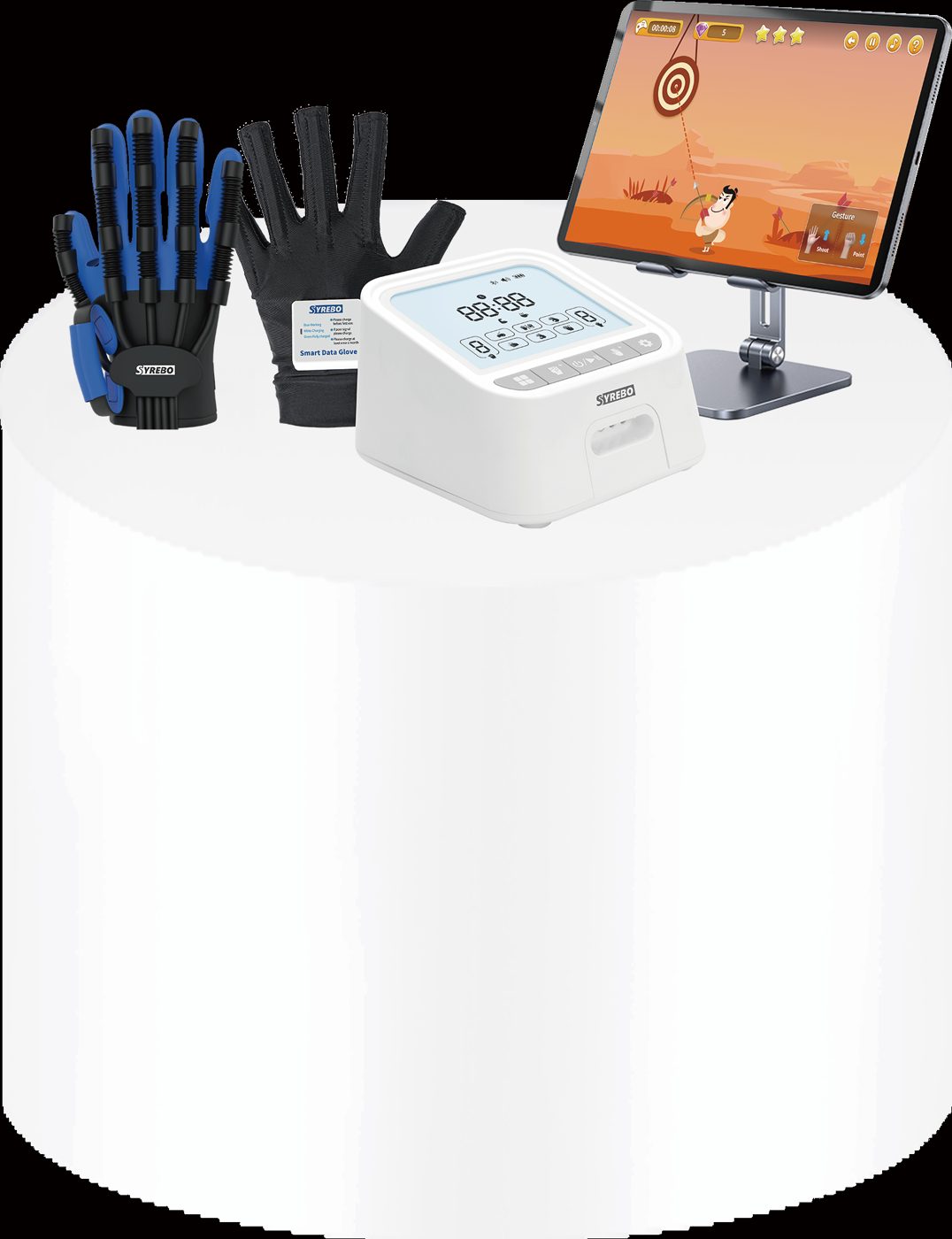
After a stroke or a neurological hand injury, one of the hardest things to rebuild is the ability to open and close the hand on command. The hand may feel weak, stiff, or “locked,” and traditional exercises can be difficult when the fingers won’t move on their own. A robotic rehabilitation glove is a wearable device designed to help with exactly this: a soft or lightweight glove that gently assists the fingers through natural grasp-and-release movements, so a person can practise hand motion many times over — even when voluntary movement is limited.
These devices are often called a rehabilitation robot glove, a robotic glove for stroke, or simply a hand rehabilitation robot. Whatever the name, the core idea is the same: use guided, repeatable movement to support hand practice as part of a wider rehabilitation program. This guide explains, in plain terms, how robotic rehabilitation gloves work — how they move the hand, how they sense what you’re doing, the training modes they offer, and why that kind of practice may support recovery.
A robotic rehabilitation glove is a hand-worn device that combines three basic ingredients: a wearable structure that fits over the fingers and hand, an actuation system that supplies the force to bend and straighten the fingers, and a control system (often with sensors) that decides when and how much to move. Many designs are “soft” — built from flexible materials rather than rigid metal frames — so they sit comfortably against the hand and follow its natural motion.
The goal is not to replace the hand or to do the work for the person indefinitely. It is to assist movement that is weak or absent, so the user can perform far more repetitions of grasp-and-release than they could unaided — under the guidance of a rehabilitation professional and as part of an individualized plan.
The actuation system is what physically bends and extends the fingers. Across the category, designs generally fall into two broad approaches:
Both approaches aim for the same outcome: a controlled, repeatable open-and-close cycle that the user’s own hand may struggle to produce alone. Designs vary in how many fingers they drive, how independently each finger moves, and how the force is tuned — which is one reason fit and setup matter.
Most robotic rehabilitation gloves include some form of sensing so the movement is coordinated rather than arbitrary. Depending on the design, sensors may detect things like finger position or bend, applied force or pressure, and the timing of the movement cycle. Some systems can also pick up a signal of the user’s intention to move — for example, a small residual muscle signal — and use it to trigger or reinforce assistance.
Sensing does two jobs. First, it keeps the motion safe and within range, so the fingers move through a comfortable, controlled arc. Second, it lets the device respond to the user — assisting when needed and encouraging the person’s own effort — which is central to the training modes below.
The way a glove is used matters as much as the hardware. Robotic rehabilitation gloves typically offer several training modes, which a therapist can select to match a person’s ability at a given stage:
Training mode | What it does |
Passive / continuous-passive | The glove moves the fingers through grasp-and-release on its own, with little or no effort from the user — often used early on, or when voluntary movement is very limited, to help maintain range of motion. |
Active-assist | The user tries to move, and the glove provides just enough help to complete the motion — a common way to encourage the person’s own participation as strength returns. |
Mirror | The stronger hand leads and the glove mirrors that movement on the weaker hand, so the two hands work together in bilateral, mirrored practice. |
Task-oriented practice | The person practises functional grasp-and-release — the kind of open-and-close used to pick up or let go of an object — a well-established rehabilitation principle. |
Repetition counting / programs | The glove counts repetitions and runs structured sessions, so the user and therapist can see how much practice was done and adjust the program over time. |
Together, these modes let the same device support someone across different stages — from a hand that can barely move, toward more active, task-like practice — always guided by a professional’s judgement about what is appropriate.
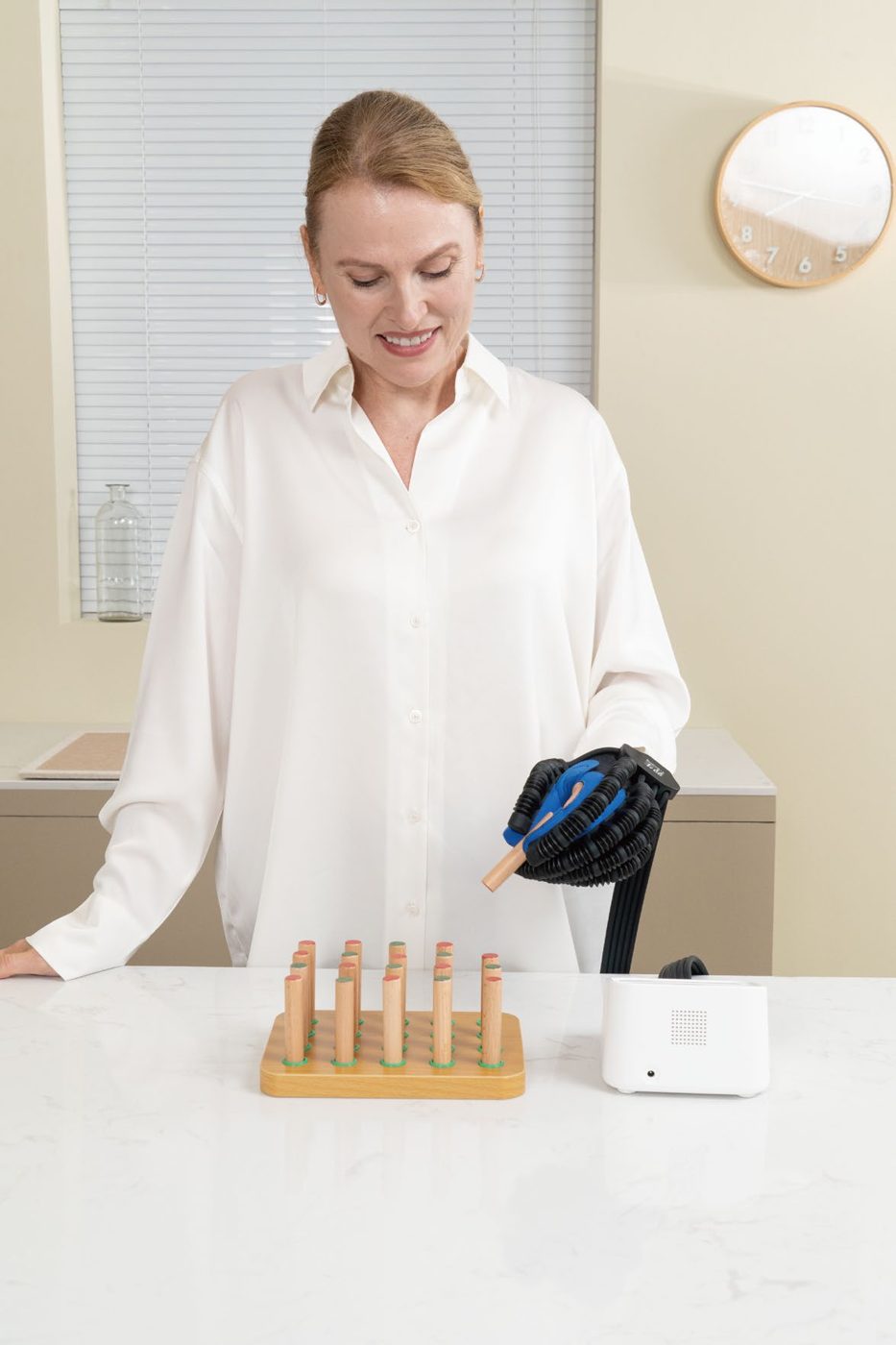
Robotic gloves are built around a simple, well-known idea in rehabilitation: the brain and nervous system can adapt with practice, a property often called neuroplasticity. Recovery of hand movement is generally understood to be supported by frequent, repetitive, task-specific practice — doing the target movement many times, in a way that resembles real use, over an extended period.
The practical problem is that a weak or partly paralyzed hand makes this kind of high-repetition practice hard to achieve unaided — it’s tiring, slow, and often frustrating. This is where a robotic rehabilitation glove may help: by assisting the movement, it can help deliver a much larger amount of guided grasp-and-release practice than the hand might manage alone, and it keeps the motion consistent. In other words, the technology is a way to support more, and more consistent, practice — it doesn’t replace the effort, the therapist, or the rehabilitation plan.
Two honest caveats matter here. First, the rationale above is qualitative — the right amount, intensity and type of practice differ from person to person, and should be set by a rehabilitation professional. Second, outcomes vary by individual; a device may support practice, but it is not a cure and results are never guaranteed.
Robotic rehabilitation gloves are generally aimed at people who want to practise hand opening and closing but find it difficult to do so on their own. That commonly includes hands that are weak, stiff, or slow to move after a stroke or other neurological condition, where active assistance can make structured practice possible.
They may be less relevant in some situations — for example, a hand that already moves well and only needs general strengthening (where simpler tools can suffice), or where there are specific medical reasons that make powered assistance unsuitable. Conditions such as severe joint contracture, skin problems, significant pain, or certain other health issues need professional assessment first. The consistent theme: a rehabilitation professional should confirm whether a robotic glove is appropriate for a given person, and how it should be used.
If you’re considering a device, a few practical factors matter more than headline features:
Syrebo builds soft robotic hand rehabilitation gloves designed for the harder case — a hand that is weak, stiff, or can’t open on its own after a stroke or neurological injury. The gloves gently assist the fingers through grasp-and-release across multiple training modes (including passive, active-assist and mirror practice), with repetition counts, so users can carry out guided, high-repetition hand practice at home while a therapist reviews progress. The gloves are designed to assist practice as part of an individualized rehabilitation plan — always under appropriate professional guidance. You can explore the home option on our rehabilitation equipment for home page, or the clinic setup on our rehabilitation system for clinic page.
A robotic rehabilitation glove uses an actuation system — commonly either soft air-pressure chambers or small motors pulling cable “tendons” — to gently bend and straighten the fingers through grasp-and-release. Sensors help keep the motion controlled and can respond to the user’s own effort, while different training modes (passive, active-assist, mirror, task-oriented, with repetition counting) let a therapist match the practice to the person’s stage.
Robotic gloves are designed to assist hand opening and closing when movement is weak or difficult, so a person can perform more guided, repetitive practice as part of rehabilitation. They may support recovery, but they are not a cure, outcomes vary by individual, and a rehabilitation professional should confirm whether a glove is appropriate.
In passive mode the glove moves the fingers for you, with little or no effort required — useful when voluntary movement is very limited. In active-assist mode you try to move and the glove adds just enough help to complete the motion, which encourages your own participation as strength returns.
The rationale is that frequent, repetitive, task-specific practice can support the nervous system’s capacity to adapt (neuroplasticity), and a glove helps deliver that practice when the hand can’t manage it alone. Evidence and results depend on the individual, the condition, and the rehabilitation plan, so use should be guided by a professional and expectations kept realistic.
Many gloves are designed for home use and aim to be simple to put on and operate, including with a caregiver’s help. The right device and training plan still depend on the user’s condition, so for neurological rehabilitation, follow the guidance of a rehabilitation professional and review progress regularly.
It depends on the person. Situations such as severe joint contracture, skin problems, significant pain, or certain other health conditions need assessment first, and powered assistance isn’t right for everyone. A qualified professional should decide whether a robotic glove is suitable and how it should be used.
Wondering if a robotic rehabilitation glove fits your recovery? Tell us about the hand and how it moves, and we’ll help you understand the options — no obligation. Get expert advice.