If you've looked into electrical stimulation for stroke or hand recovery, you've probably run into three acronyms — TENS, EMS, and FES — often used as if they were the same thing. They aren't.
All three deliver small electrical currents to the body through electrodes on the skin. That shared mechanism is where the similarity ends. One is aimed mainly at pain, one at muscle activation, and one at completing a functional movement such as a grasp. Choosing the wrong type for your goal means the device may do something — just not the thing you actually need.
This guide explains each type in plain language, sets them side by side, and describes how a rehabilitation professional typically decides which is appropriate. Electrical stimulation has real contraindications and should always be set up and used under professional guidance — more on that below.
Electrical stimulation (often shortened to "e-stim" or grouped under electrotherapy) uses low- or medium-frequency electrical currents, delivered through electrodes on the skin, to act on nerves and muscles. Depending on where the electrodes sit and how the current is timed and dosed, the same broad technology can be pointed at very different goals.
In rehabilitation, that goal is usually one of three things: calming pain, waking up and strengthening muscle, or helping a weak limb complete a real movement. TENS, EMS and FES are three answers to those three goals. Understanding which goal a device is built for is the whole point of telling them apart — the settings, electrode placement, and dosing all follow from it, and they must be set correctly for the stimulation to do what's intended.
TENS is aimed primarily at pain relief. It uses currents tuned to stimulate sensory nerves rather than to make muscles contract — you feel a tingling or buzzing sensation, but the limb doesn't do work.
The common explanation is that this sensory input may influence how pain signals are processed, which is why TENS has been studied and widely used for symptomatic pain relief. In a stroke or hand-rehabilitation context, TENS may be considered for managing painful shoulder or hand symptoms so that a person is more comfortable — but on its own it is not a movement-training tool. It changes how the area feels, not what the hand can do.
EMS targets the muscle by stimulating the motor nerves that make it contract. Instead of just creating a sensation, EMS produces an actual visible muscle contraction. It's used for muscle re-education and strengthening — for example, helping activate a weakened muscle, reducing disuse-related weakness, or reminding a muscle how to fire after a period of inactivity.
For hand and stroke rehabilitation, EMS may be used to help a weak muscle contract that a person struggles to activate voluntarily. The contraction it produces is isolated, though — the muscle fires, but the current isn't necessarily timed to any purposeful task. That timing is exactly what separates EMS from the third type.
FES is a specialized use of muscle stimulation where the current is timed to assist a functional movement — the stimulation fires at the right moment to help complete a purposeful action, such as opening the hand and closing it around an object, or lifting the foot while walking.
This timing is what makes FES a neurorehabilitation tool rather than just a strengthening one. By coupling the electrical assistance to an intended, real-world movement while the person is actively trying to perform it, FES has been studied as a way to support motor recovery — the idea being that pairing intention with a completed movement is more meaningful for the nervous system than an isolated contraction. As with the others, whether FES is appropriate, and how it's programmed, is a clinical decision.
| TENS | EMS | FES | |
|---|---|---|---|
| Full name | Transcutaneous Electrical Nerve Stimulation | Electrical Muscle Stimulation | Functional Electrical Stimulation |
| Main purpose | Pain relief / symptom management | Muscle re-education and strengthening | Assisting a purposeful, functional movement |
| What it stimulates | Sensory nerves (a sensation, no work) | Motor nerves (a visible muscle contraction) | Motor nerves, timed to a task |
| Typical use | Painful shoulder/hand, general pain symptoms | Activating or strengthening a weak muscle | Grasp-and-release, foot lift during gait |
| Who it's for | People whose main issue is pain | Weak or under-active muscles needing activation | Weak limbs that need help completing a real movement |
| Timed to a movement? | No | Not necessarily — isolated contraction | Yes — that's the defining feature |
| Used with active practice? | Usually alongside comfort/other care | Can be, but not inherently task-linked | Yes — paired with the person's own effort |
The clearest way to think about these three is to start with what you're trying to achieve, then work back to the type:
Two important caveats. First, these aren't mutually exclusive — a rehabilitation plan may use more than one at different stages, and some are combined with active, task-based practice rather than used alone. Second, the right choice, the settings, and the electrode placement all vary by individual and must be set correctly; the same device pointed at the wrong goal, or dosed wrong, won't deliver what you expect.
Electrical stimulation is not suitable for everyone, and it has genuine contraindications. It is generally not recommended — or requires specific clinical clearance — for people with a pacemaker or other implanted electronic device, people with epilepsy, during pregnancy, and over certain areas such as the front of the neck, the chest across the heart, broken or infected skin, or areas with reduced sensation. Placement, intensity, and timing all matter and must be set correctly.
Because of this, TENS, EMS and FES should be used under professional guidance. Before starting any electrical-stimulation program for stroke or hand recovery, consult a physician or qualified rehabilitation professional to confirm it's appropriate for your situation, and to set it up safely. Nothing here is medical advice or a substitute for that assessment.
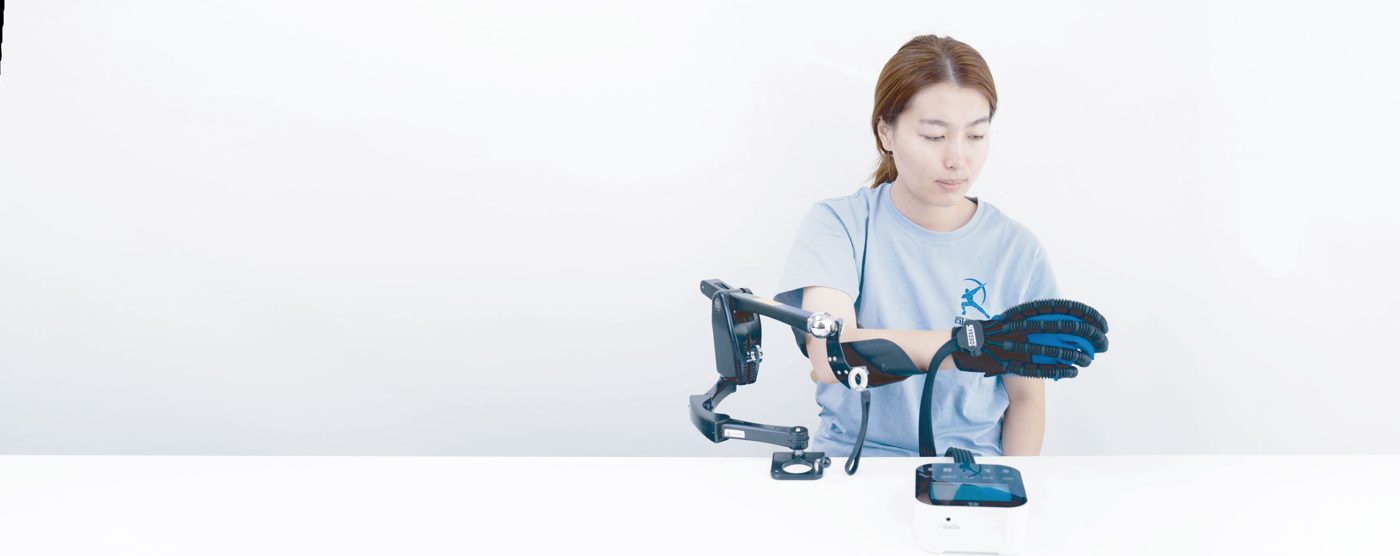
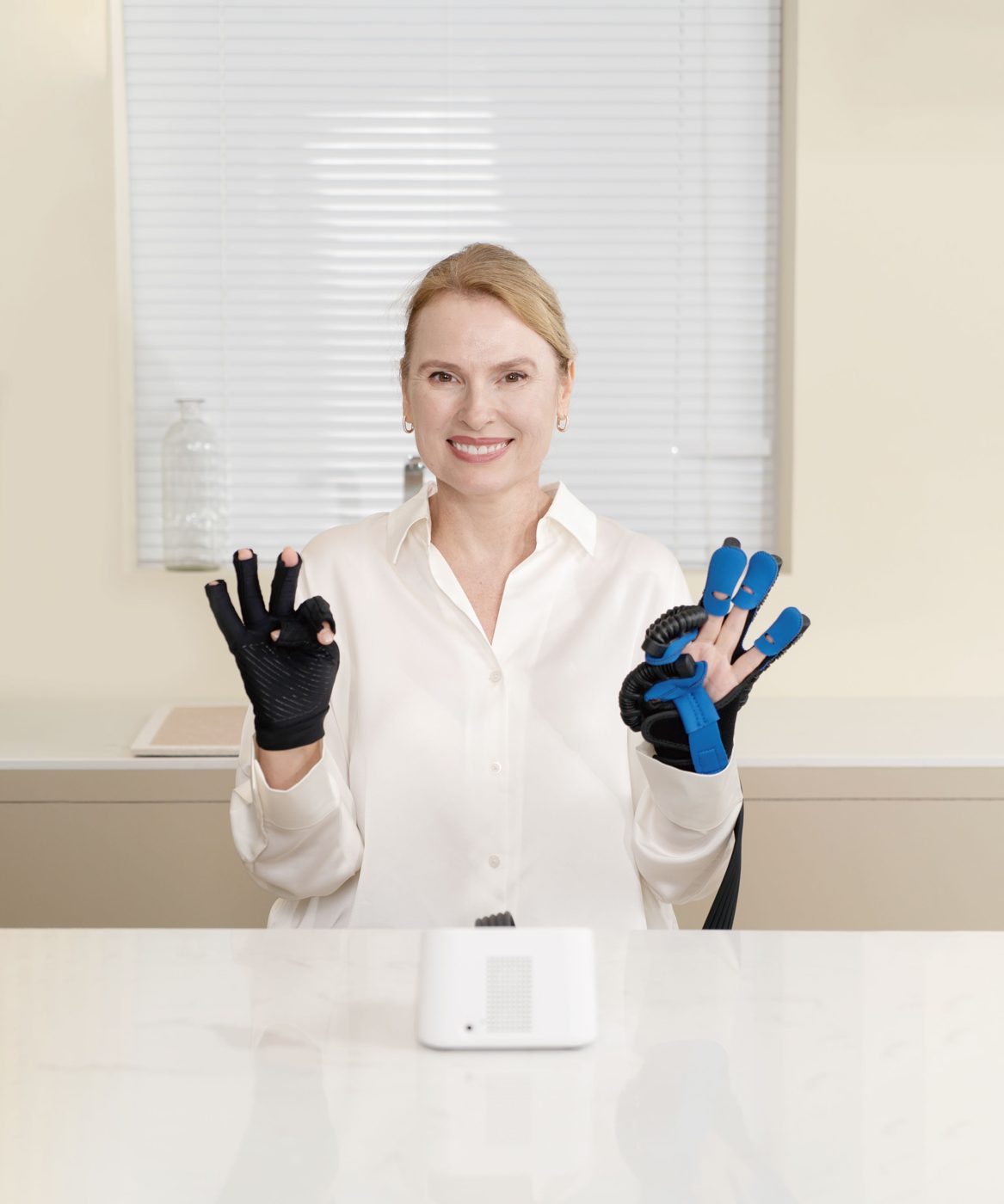
Syrebo's approach to hand recovery combines low- and medium-frequency electrotherapy with soft robotic rehabilitation gloves for active, task-based hand practice. Where electrotherapy works on the nerve-and-muscle side, the robotic glove focuses on the functional side — gently assisting the fingers through many guided grasp-and-release repetitions so the hand actually completes the movement, at home, with therapist-set modes. Explore our home hand rehabilitation equipment to see how this fits into a home program. Which combination is appropriate should be decided with a rehabilitation professional.
All three are types of electrical stimulation delivered through the skin, but they target different goals. TENS stimulates sensory nerves mainly for pain relief. EMS stimulates motor nerves to make a muscle contract, for muscle re-education and strengthening. FES also stimulates muscle, but times the stimulation to assist a purposeful movement — such as grasping an object — which is why it's used in neurorehabilitation.
There isn't a single "best" — it depends on the goal and the individual. TENS may help manage painful symptoms, EMS may help activate a weak muscle, and FES is aimed at assisting functional movements like opening and closing the hand. The right choice, and the settings, should be decided with a rehabilitation professional after assessment.
No. Electrical stimulation has contraindications — for example, it's generally not recommended for people with a pacemaker or other implanted device, people with epilepsy, during pregnancy, or over certain areas of the body. It should be used under professional guidance, and you should consult a physician or qualified rehabilitation professional before starting.
It's generally used to support rehabilitation, not replace it. Approaches like FES are designed to be paired with the person's own effort and active, task-based practice. Whether and how to combine stimulation with exercise varies by individual and should be guided by a professional.
Syrebo's hand-recovery approach combines low- and medium-frequency electrotherapy with soft robotic rehabilitation gloves for active grasp-and-release practice. The idea is to pair the nerve-and-muscle side with functional movement training. Which combination is appropriate should be confirmed with a rehabilitation professional.
Not sure which type of stimulation — or approach — fits your recovery? Tell us about the hand and your recovery goal, and we'll help you understand the options. Always confirm your plan with your own clinician — no obligation. Get expert advice.