Why a Structured Evaluation Matters
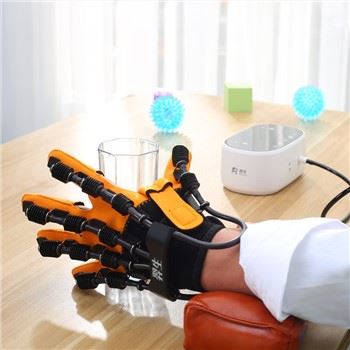
Stroke frequently impairs hand motor function, limiting a person's ability to grasp, hold, and manipulate everyday objects. Robotic gloves — wearable devices that assist or train finger and hand movement — have become an increasingly common tool in neurorehabilitation. Research suggests that robot-assisted training may help improve arm and hand function after stroke, although outcomes vary between individuals and any device should be used under a clinician's guidance.12
For clinic procurement teams, therapists, and distributors, the challenge today is less about finding a robotic glove and more about choosing among many. Ranked brand lists rarely help, because no single device suits every patient profile, therapy protocol, or care setting. A more reliable approach is to evaluate each candidate device against a consistent set of objective criteria. The ten criteria below provide such a framework.
The 10 Criteria That Matter
1. Clinical evidence and research support
Start with the evidence base. A Cochrane systematic review of electromechanical and robot-assisted arm training after stroke found that this type of training may improve activities of daily living, arm function, and muscle strength, while noting that the certainty of evidence differs across studies.1 A 2021 meta-analysis in Physical Therapy reported similar findings for upper-extremity robot-assisted therapy.2 Ask each manufacturer for peer-reviewed publications involving their specific device — not just the underlying technology — and check whether the studies were conducted independently.
2. Indication coverage and patient matching
Verify which patient profiles the device is designed for: stage of recovery (acute, subacute, or chronic), severity of hand impairment, degree of spasticity, and the cognitive ability needed to take part in training. A glove suited to mildly impaired chronic patients may be inappropriate for a subacute patient with a flaccid hand. Review the manufacturer's stated indications and contraindications, and map them to the caseload you actually treat.
3. Training modes and therapy versatility
Different rehabilitation stages call for different training modes. Common options include passive mobilization for early or severe impairment, active-assisted training that supports the patient's own effort, active and resistive modes for later stages, and bilateral or mirror-based training. Some devices add functional electrical stimulation, EMG-driven control, or gamified task-oriented exercises. A device covering several modes can serve a broader patient population and adapt as each patient progresses.
4. Safety and regulatory status
Confirm the market-specific regulatory status of each model and request current supporting documentation. In the European Union, check applicable CE marking and MDR documentation. In the United States, distinguish establishment registration and device listing from product-level 510(k) clearance or PMA approval; these are different regulatory records. It is also reasonable to ask about the manufacturer's medical-device quality management system. Verify certificate numbers, scope and validity directly with the relevant records because status can change over time.
5. Ease of use and setup time
In a busy clinic, minutes matter. Evaluate how long donning and doffing takes, whether a patient with one functional hand can apply the glove, how sizing is adjusted, and how quickly a therapist can switch between patients or training programs. Devices that are simple to operate are more likely to be used consistently — and consistent use is a precondition for any rehabilitation benefit.
6. Comfort, fit, and hygiene
A rehabilitation glove is worn against the skin, often by multiple patients per day. Check the available size range, weight, and materials, and whether textile components can be removed and washed or disinfected between users. Soft robotic designs, which use flexible actuators instead of rigid linkages, have been described in the literature as one approach to improving wearability and anatomical fit.3 Whatever a device's technical merits, poor comfort is a common reason it ends up unused.
7. Data, feedback, and progress tracking
Objective feedback supports both patient motivation and clinical decision-making. Look for devices that record session data — repetitions, range of motion, assistance level, or grip force — and present it in reports that therapists can review and share. Consider how that data fits your documentation workflow and whether it can be exported when needed.
8. Portability and use setting
Clarify where the device will be used: a hospital rehabilitation department, an outpatient clinic, or the patient's home. Weight, battery life, setup requirements, and the availability of a companion app all affect suitability for home-based programs. If your organization plans to support training between clinic visits, prioritize devices designed and cleared for home use, with clear instructions for patients and caregivers.
9. Training, onboarding, and clinical support
Even a well-designed device underperforms without proper onboarding. Ask what initial training the manufacturer or distributor provides, whether clinical protocols and suggested session structures are included, and whether a clinical specialist is available for questions. International guidelines emphasize that rehabilitation technology should be integrated into an individualized therapy plan rather than used in isolation,4 so vendor support for that integration has real value.
10. After-sales service, warranty, and parts
Finally, evaluate the practical backbone: warranty terms, response time for technical issues, availability of spare parts and consumables, software update policy, and — for distributors — the support structure for your own downstream customers. A device that cannot be serviced promptly becomes a liability rather than an asset.
Putting the Criteria into Practice
Turn the list into a simple scorecard and apply it to every device you evaluate. Whenever possible, arrange a hands-on demonstration or a trial period, and involve both the therapists who will run the sessions and, where appropriate, the patients who will wear the device. Document your scoring so the decision remains defensible when staffing or budgets change. Above all, remember that a robotic glove is one component of a rehabilitation program: the AHA/ASA guidelines for adult stroke rehabilitation stress individualized, task-oriented care planned by qualified professionals,4 and device selection should follow the same principle.
How Syrebo Approaches These Criteria
At Syrebo, we develop our hand rehabilitation product line — including robotic training gloves for clinical and home use — around the same criteria described above: evidence-informed training modes, multiple therapy programs for different recovery stages, and structured training and after-sales support for clinics and distributors. You can explore our product range and our clinical evidence library, which includes published studies involving Syrebo devices.
If you are evaluating robotic gloves for your clinic or distribution portfolio, our team is glad to walk through these criteria with you and arrange a demonstration. Contact us to start the conversation.
References
- Mehrholz J, Pohl M, Platz T, Kugler J, Elsner B. Electromechanical and robot-assisted arm training for improving activities of daily living, arm function, and arm muscle strength after stroke. Cochrane Database of Systematic Reviews. 2018;(9):CD006876. https://doi.org/10.1002/14651858.CD006876.pub5
- Wu J, Cheng H, Zhang J, Yang S, Cai S. Robot-Assisted Therapy for Upper Extremity Motor Impairment After Stroke: A Systematic Review and Meta-Analysis. Physical Therapy. 2021;101(4):pzab010. https://doi.org/10.1093/ptj/pzab010
- Chu CY, Patterson RM. Soft robotic devices for hand rehabilitation and assistance: a narrative review. Journal of NeuroEngineering and Rehabilitation. 2018;15:9. https://doi.org/10.1186/s12984-018-0350-6
- Winstein CJ, Stein J, Arena R, Bates B, Cherney LR, Cramer SC, et al. Guidelines for Adult Stroke Rehabilitation and Recovery: A Guideline for Healthcare Professionals From the American Heart Association/American Stroke Association. Stroke. 2016;47(6):e98-e169. https://doi.org/10.1161/STR.0000000000000098