
Robotic gloves have moved from research laboratories into everyday clinical practice. For people living with hand weakness or paralysis after stroke, spinal cord injury, or other neurological conditions, these devices can deliver high-repetition, assisted movement that is difficult to sustain with hands-on therapy alone. Yet a robotic glove is not a self-driving intervention. Its clinical value depends on how it is selected, dosed, and integrated into a broader plan of care — and that is precisely where occupational therapists (OTs) come in. This article outlines the OT's role across five stages of robotic glove rehabilitation: assessment, goal setting, training prescription, home programming, and progress monitoring.
Why Robotic Glove Training Needs Clinical Guidance
A robotic glove is a tool, not a treatment plan. Research suggests that electromechanical and robot-assisted arm training, when used alongside conventional therapy, may improve arm function and activities of daily living for some people after stroke (Mehrholz et al., 2018). At the same time, large randomized trials such as RATULS found that robot-assisted training was not superior to an intensive, therapist-led upper limb programme (Rodgers et al., 2019). Taken together, the evidence points to robotic devices as an adjunct to skilled therapy rather than a replacement for it. Outcomes vary from person to person and depend on dose, task relevance, and engagement — all variables that a clinician, not the device, manages.
1. Assessment and Candidate Selection
Before a glove is ever switched on, the occupational therapist builds a clinical picture of the patient. A typical baseline assessment covers passive and active range of motion, muscle tone, grip and pinch strength, sensation, pain, edema, and skin condition. Standardized measures such as the Fugl-Meyer Assessment for the upper extremity, the Action Research Arm Test, or the Box and Blocks Test provide objective baselines that can be re-measured later. The therapist also screens cognition, vision, and the ability to follow instructions, because independent or caregiver-assisted use of a device requires a minimum level of comprehension. Precautions — unhealed wounds, severe fixed contractures, unstable orthopedic conditions, or significant pain — may rule out or delay device use. This assessment answers a fundamental question: is the glove intended for impairment-level practice, for assistance with daily tasks, or for maintenance of range and tissue health?
2. Setting Goals Around Occupation
Occupational therapists translate impairment findings into goals that matter in daily life. Instead of "use the glove three times a week," an occupation-based goal might be "open the affected hand enough to hold a cup during breakfast" or "tolerate 20 minutes of assisted finger extension to prepare for self-feeding practice." Goals are set collaboratively with the patient and family, framed in specific, measurable terms, and revisited on a defined schedule. The glove is always a means to an end: the end is participation in dressing, eating, hygiene, work, or leisure tasks.
3. Prescribing and Supervising Training Sessions
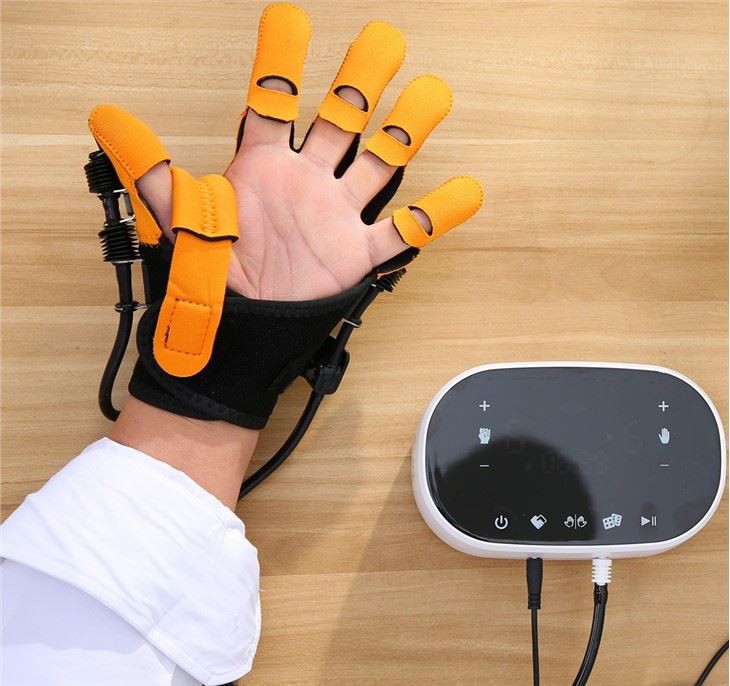
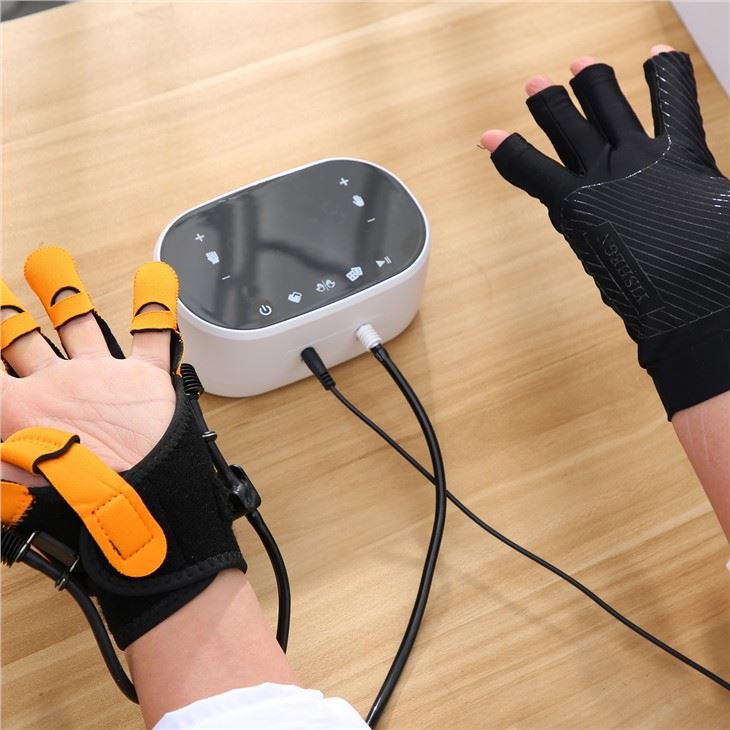
During clinic sessions, the therapist controls the training "dose." That starts with fit: a glove that is too loose cannot transmit movement effectively, and one that is too tight risks discomfort and skin irritation, so skin checks before and after sessions become routine. The therapist then selects the training mode — passive stretching for a flaccid or high-tone hand, assisted repetitive grasp-and-release cycles, bilateral or mirror-mode training in which the unaffected hand leads the affected one, or game-based task practice, depending on the device's capabilities. Dosage decisions cover session length, weekly frequency, repetition targets, and rest intervals, progressed gradually as tolerance improves. Early sessions are closely supervised for fatigue, pain, and compensatory movement patterns, and glove repetitions are paired with functional, off-device task practice so that gains transfer into daily activity.
4. Home Programs and Caregiver Education
Much of the value of a wearable device lies in the repetition it makes possible outside the clinic. Reviews of soft robotic hand devices note that home use is a central driver of the field (Chu & Patterson, 2018). The occupational therapist therefore designs the home programme: teaching donning and doffing, charging and cleaning, safe session structure, and how to keep a simple usage log. Where family members or caregivers are involved, the therapist trains them to assist with setup without taking over the exercise itself, and builds adherence strategies such as scheduled session times and remote check-ins. Home devices such as our family care robotic glove for hand paralysis and the wider rehabilitation equipment for home range are intended to be prescribed within exactly this kind of supervised home framework.
5. Monitoring Progress and Adjusting the Plan
Re-assessment closes the loop. At defined intervals — commonly every four to six weeks — the therapist repeats the same standardized measures used at baseline and compares them with functional goals. Device-generated data such as session counts, repetitions, or range-of-motion records can inform this review, but they complement rather than replace clinical judgment. If progress plateaus, the therapist adjusts parameters, shifts the task emphasis, adds conventional techniques, or transitions the patient to a maintenance programme. Findings are documented and shared with the wider rehabilitation team so that glove training stays coordinated with physiotherapy, speech therapy, and medical management.
What the Evidence Says
Systematic reviews of robot-assisted upper limb training report mixed but generally supportive findings: research suggests it may help some patients add meaningful movement repetition and improve arm function and daily activities, while other analyses find no clear advantage over dose-matched conventional therapy (Mehrholz et al., 2018; Veerbeek et al., 2017). The honest reading of the literature is that robotic gloves are a promising adjunct whose results vary — and that outcomes are strongest when a therapist guides assessment, dosing, and progression. Patients and families should always follow the guidance of their own treating clinician. For a curated overview of published research relevant to our product range, see our clinical evidence page.
For Clinics and Therapy Teams
If your clinic or therapy team is evaluating robotic glove options for upper limb rehabilitation, we can provide product documentation, training materials, and guidance on integrating device-based sessions into your existing care pathways. Contact us to start the conversation — we are glad to support occupational therapists and rehabilitation teams with the information they need to make an informed decision.
References
- Mehrholz J, Pohl M, Platz T, Kugler J, Elsner B. Electromechanical and robot-assisted arm training for improving activities of daily living, arm function, and arm muscle strength after stroke. Cochrane Database of Systematic Reviews. 2018;9:CD006876. doi.org/10.1002/14651858.CD006876.pub5
- Veerbeek JM, Langbroek-Amersfoort AC, van Wegen EEH, Meskers CGM, Kwakkel G. Effects of robot-assisted therapy for the upper limb after stroke. Neurorehabilitation and Neural Repair. 2017;31(2):107-121. doi.org/10.1177/1545968316666957
- Rodgers H, Bosomworth H, Krebs HI, et al. Robot assisted training for the upper limb after stroke (RATULS): a multicentre randomised controlled trial. The Lancet. 2019;394(10192):51-62. doi.org/10.1016/S0140-6736(19)31055-4
- Chu CY, Patterson RM. Soft robotic devices for hand rehabilitation and assistance: a narrative review. Journal of NeuroEngineering and Rehabilitation. 2018;15:9. doi.org/10.1186/s12984-018-0350-6