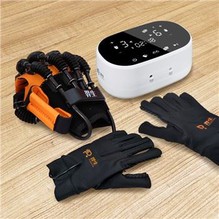
Stroke is a leading cause of long - term disability worldwide. After a stroke, rehabilitation is crucial for patients to regain lost functions and improve their quality of life. Home rehabilitation has become an increasingly popular option as it allows patients to recover in a familiar and comfortable environment. As a home rehabilitation device supplier, I am well - versed in the types of devices that are suitable for stroke patients. In this blog, I'll introduce some of these devices to help patients and their families make informed decisions.
1. Mobility Aids
- Wheelchairs: For stroke patients who have significant mobility impairments, wheelchairs are essential. There are two main types: manual and electric. Manual wheelchairs are lightweight and cost - effective, suitable for patients with some upper - body strength who can operate them independently. Electric wheelchairs, on the other hand, are ideal for patients with limited upper - body strength. They offer greater mobility and can be controlled with a joystick. Some advanced electric wheelchairs even come with features like adjustable seating positions and shock - absorbing systems to ensure the patient's comfort.
- Walking Canes and Walkers: Walking canes are useful for patients who have mild balance issues and only need a little extra support. They are easy to carry and can be used both indoors and outdoors. Walkers provide more stability compared to canes. There are different types of walkers, such as standard walkers, wheeled walkers, and rollators. Standard walkers require the patient to lift the device with each step, while wheeled walkers and rollators can be rolled forward, which is less strenuous. Rollators often come with additional features like seats and baskets, making them more versatile.
2. Hand and Finger Rehabilitation Devices
- Hand Grippers: These are simple yet effective devices for improving hand strength. They come in different resistance levels, allowing patients to gradually increase the intensity of their exercises as their strength improves. Hand grippers can be used in various ways, such as squeezing the gripper slowly or doing rapid repetitions. They are portable and can be used anywhere, which is very convenient for home - based rehabilitation.
- Hand Finger Physical Therapy Equipment: This category includes a wide range of devices designed to rehabilitate the fingers and hands. For example, finger stretchers can help increase the range of motion of the fingers, especially if they are stiff after a stroke. There are also devices that use rubber bands or springs to provide resistance during finger exercises. These devices can be customized according to the patient's needs and the severity of their condition.
- Hand Finger Rehabilitation Equipments: Advanced hand - finger rehabilitation equipment may use technology such as sensors and motors. These devices can provide real - time feedback on the patient's performance, such as the force applied during a grip or the range of motion achieved. Some of them can also be connected to a mobile app, allowing patients and their therapists to track progress over time.
3. Balance and Coordination Training Devices
- Balance Boards: Balance boards are used to improve a patient's balance and sense of equilibrium. They come in different shapes and sizes, from simple flat boards to more complex ones with adjustable tilt. Standing on a balance board and trying to maintain stability challenges the patient's core muscles and helps improve their overall balance. Balance board exercises can be adapted to different levels of difficulty, making them suitable for patients at various stages of recovery.
- Coordination Training Sets: These sets usually include a variety of objects and activities designed to improve hand - eye coordination. For example, there may be target - shooting games or ball - catching exercises. Coordination training is important for stroke patients as it helps them regain the ability to perform daily tasks such as dressing, eating, and writing.
4. Neuromuscular Stimulation Devices
Neuromuscular stimulation (NMS) devices work by sending electrical impulses to the muscles, causing them to contract. This can help prevent muscle atrophy, improve muscle strength, and also stimulate nerve regeneration. There are different types of NMS devices, such as transcutaneous electrical nerve stimulation (TENS) units and functional electrical stimulation (FES) devices. TENS units are mainly used for pain relief, while FES devices are more focused on muscle activation and rehabilitation. They can be used on different parts of the body, such as the arms, legs, or hands, depending on the patient's specific needs.
5. Cognitive Rehabilitation Devices
Many stroke patients also experience cognitive impairments, such as memory loss, attention problems, and difficulty with problem - solving. There are now some cognitive rehabilitation devices available that can help improve these functions. Some of these devices are in the form of computer - based games or apps that are specifically designed to target different cognitive domains. For example, there are memory - training games that require the patient to remember sequences of numbers or images, and attention - training games that involve finding hidden objects in a picture. These games can be adjusted according to the patient's cognitive level, providing a personalized rehabilitation experience.
6. Household Stroke Rehabilitation Exercises At Home
In addition to using specific rehabilitation devices, there are also many household items that can be used for stroke rehabilitation exercises. For example, a simple broomstick can be used for arm and shoulder exercises. Patients can hold the broomstick with both hands and perform movements such as lifting, stretching, and rotating. Empty water bottles can be used as weights for strengthening the arms. Making use of these household items can not only save costs but also make rehabilitation exercises more accessible and convenient.
As a home rehabilitation device supplier, I understand that choosing the right devices for stroke patients is a complex process that requires considering the patient's specific condition, needs, and recovery goals. That's why I'm here to offer professional advice and support. If you're interested in purchasing home rehabilitation devices for stroke patients, I'd be more than happy to have a detailed discussion with you. We offer a wide range of high - quality rehabilitation devices at competitive prices and can provide you with comprehensive after - sales services.


Reach out to me for a consultation about which devices are most suitable for your situation. Let's work together to help stroke patients achieve a better recovery and a more independent life.
References
- Mayo Clinic. (2023). Stroke rehabilitation. Retrieved from Mayo Clinic official website.
- World Health Organization. (2022). Rehabilitation: A key component of health care. World Health Organization reports.
- American Heart Association. (2023). Guidelines for stroke rehabilitation. American Heart Association Journals.