| Study type | Randomized controlled study |
| Participants | 40 subacute stroke patients (two groups of 20 each) |
| Journal | Chinese Journal of Stroke, 16(3):224–229, 2021 |
| Key result | Adding mirror-motion robot training produced significantly greater upper-limb motor-function and hand-movement recovery vs. conventional therapy alone |
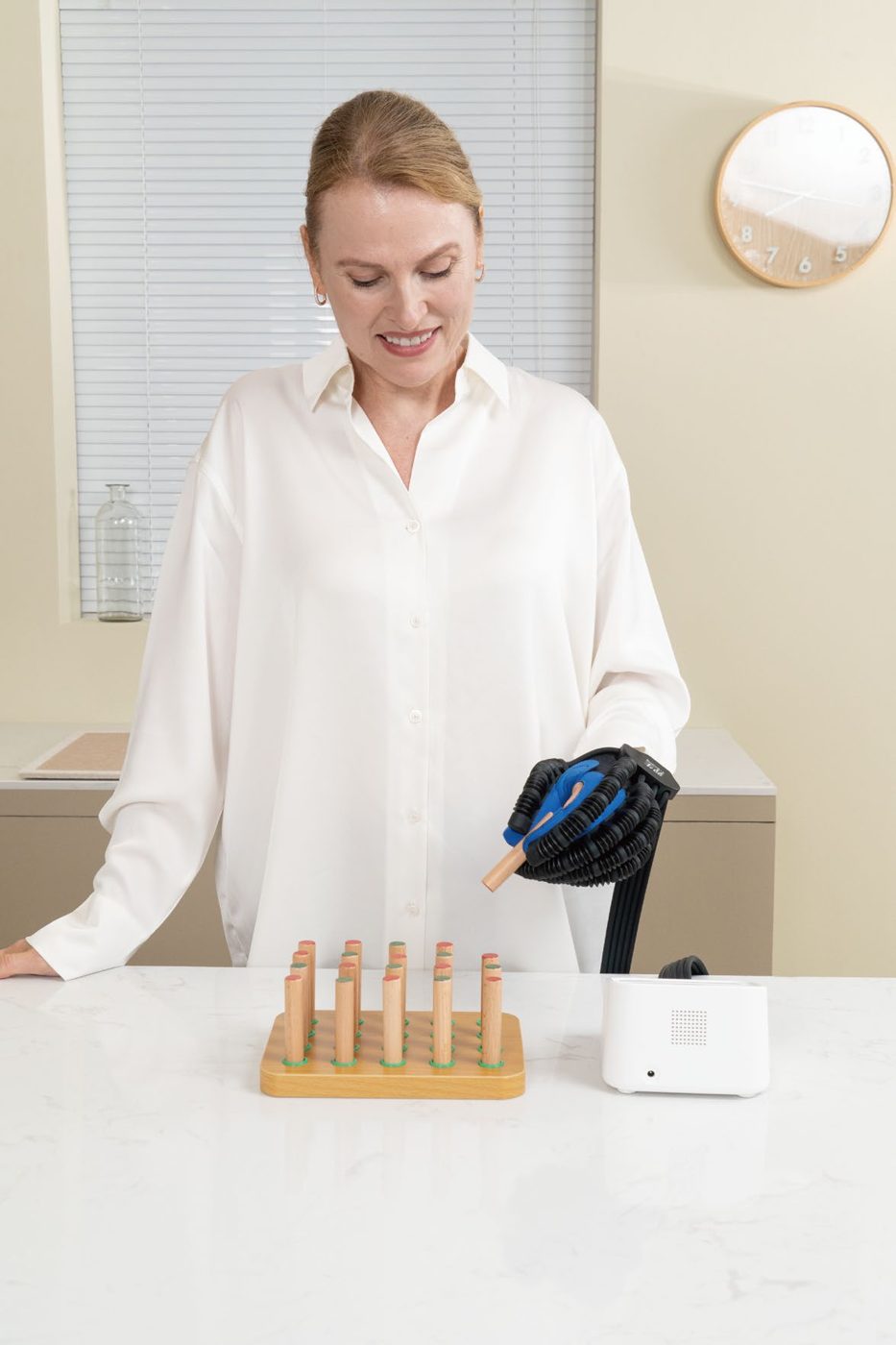
This 2021 randomized controlled study asked whether a mirror motion rehabilitation robot could help stroke patients recover hand movement during the sub-acute stage — the critical window in the first weeks to months after a stroke, when the brain is most able to rewire itself. Forty patients were split into two equal groups: one received conventional rehabilitation only, the other added mirror-motion robot training on top. The robot-assisted group improved significantly more on upper-limb motor function, on hand-movement recovery, and on functional hand-movement performance. Because patients were randomly assigned — the design that best isolates whether a treatment itself is responsible for the improvement — the finding is a meaningful signal that the mirror approach adds real value.
The hand is one of the slowest parts of the body to recover after a stroke, and conventional therapy alone often stalls. Mirror therapy offers a different lever: by mirroring movements of the unaffected hand, it creates the visual illusion that the impaired hand is moving normally, which is thought to engage the brain's mirror-neuron system and prime the motor pathways of the affected side. A mirror-motion robot extends this idea — the healthy hand's movement drives the robot to physically move the affected hand in the same pattern, pairing the visual illusion with real, repeated movement. The researchers set out to test whether this combined mechanism outperforms standard care in the sub-acute stage.
This study points to a mechanism that complements what training robots deliver elsewhere in the stroke-recovery evidence base. Where our robotic training-glove RCT showed that adding assisted repetition boosts grip strength and motor gains, this trial highlights the mirror pathway — using the unaffected hand to guide the affected one and engaging the brain's mirror-neuron system during the sub-acute window when neuroplasticity is highest. The two are complementary: high-repetition assisted movement plus mirrored, brain-engaging practice. Syrebo's home rehabilitation gloves support mirror-mode training so patients can keep up the volume between sessions, while clinical systems enable supervised, high-intensity programs. The right device and timing depend on the individual and should be guided by a rehabilitation professional.
Wang, C., Liu, L., Liu, X., Xiang, Y., Chen, Y., & Jia, J. (2021). The rehabilitation effect of mirror motion rehabilitation robot on hand movement dysfunction in the sub-acute stage of stroke. Chinese Journal of Stroke, 16(3), 224–229. https://doi.org/10.3969/j.issn.1673-5765.2021.03.002
In this 2021 randomized controlled study of 40 sub-acute stroke patients, those who added mirror-motion robot training to conventional rehabilitation showed significantly greater improvement in upper-limb motor function and hand-movement recovery than those doing conventional therapy alone. Results vary by individual, and rehabilitation should be guided by your medical team.
Mirror therapy uses the movement of the unaffected hand to create the visual impression that the impaired hand is moving normally, engaging the brain's mirror-neuron system. A mirror-motion robot goes further by having the healthy hand's movement physically drive the affected hand through the same motion, pairing the visual illusion with real, repeated practice.
The sub-acute stage — roughly the first weeks to months after a stroke — is when the brain's capacity to reorganize (neuroplasticity) is highest, so intensive, task-focused training during this window is thought to have the greatest effect on recovery.
This article summarizes published research for educational purposes. It is not medical advice and does not guarantee individual outcomes. Always consult a qualified healthcare professional about stroke rehabilitation.