Stroke Center
Home>Stroke Center>Content
Home>Stroke Center>Content
If someone you love has a hand that will not move — or if it is your own hand — the first question is almost always the same: can a paralyzed hand recover? The honest answer is that recovery is often possible, but it varies greatly from person to person. Many people regain some function over time, some regain a great deal, and not everyone recovers fully. What research consistently shows is that the brain and nervous system can adapt, and that structured, consistent treatment gives the hand its best chance. This guide explains, in plain language, what “paralysis” of the hand actually means, what the science says about recovery, and the treatment approaches that are studied and used today — so you can have a clearer, more hopeful, and more realistic conversation with your medical team.
A quick but important note: this article is educational. It cannot tell you what will happen to a specific hand — only a qualified clinician who has examined it can do that. Use what follows to understand the landscape, then bring your questions to your physician or therapist.
In everyday language, a “paralyzed hand” simply means a hand that cannot move the way it should. Medically, though, hand paralysis is not a single condition — it depends on what was injured and where. That difference matters, because it shapes how much recovery potential the hand has.
After a stroke, the muscles and nerves in the hand are usually still intact — it is the part of the brain that sends movement signals that was injured. The hand does not move because the message is not getting through, not because the hand itself is broken. This is a key reason stroke-related hand paralysis often has meaningful recovery potential: the goal of rehabilitation is to help the brain find new pathways to the hand.
By contrast, a peripheral nerve injury (damage to the nerves in the arm or hand itself) or a spinal cord injury affects the wiring between the brain and the muscles more directly. Recovery is still possible in many cases, but it follows a different course and timeline, and depends heavily on the level and severity of the injury. Because the mechanisms differ, treatment plans differ too — which is why an accurate diagnosis is the essential first step.
Especially after a stroke, a hand that cannot move can be in one of two very different states:
Understanding which state a hand is in helps explain why the same word — “paralyzed” — can describe hands with quite different outlooks, and why treatment is matched to the stage. Our guide to the Brunnstrom stages of stroke recovery maps this journey from flaccid to spastic to returning control in detail.
The reason clinicians can be hopeful — honestly, not just kindly — is a property of the brain called neuroplasticity: its ability to reorganize and form new connections in response to experience and practice. When the pathways that once controlled the hand are damaged, the brain can, under the right conditions, recruit other areas and strengthen alternative routes. Neuroplasticity is the biological basis of rehabilitation, and it is well established in stroke recovery research.
Two ideas from the research are especially worth knowing:
None of this guarantees a specific outcome. Neuroplasticity creates potential; turning that potential into function takes consistent, well-designed work over time.
There is no single “cure” for a paralyzed hand, and any source promising one should be treated with caution. Instead, modern rehabilitation combines several studied approaches, usually layered together and adjusted as the hand changes. Below are the main ones your medical team may discuss. Think of these as studied, commonly used methods rather than promises — the right mix depends on the person.
Practicing purposeful movements — reaching, grasping, releasing, manipulating objects — in high volume is a cornerstone of motor rehabilitation. The principle is simple: the brain rewires around the tasks it repeats. In the earliest, flaccid stage, this may mean a therapist or caregiver moving the hand through its range (passive movement) to preserve the joints and feed input back to the brain; later it becomes active, goal-directed practice.
In mirror therapy, the reflection of the unaffected hand is positioned so the brain “sees” the affected hand moving normally. This visual trick is used to help re-engage the brain's movement networks, and it is one of the more studied add-ons in stroke hand rehabilitation, particularly when active movement is limited.
Devices that deliver gentle electrical impulses — such as TENS-style electrical stimulation devices — are used to stimulate nerves and muscles, help manage tightness, and support movement practice. Electrical stimulation is a well-studied adjunct in neurorehabilitation and is often combined with active exercise rather than used alone.
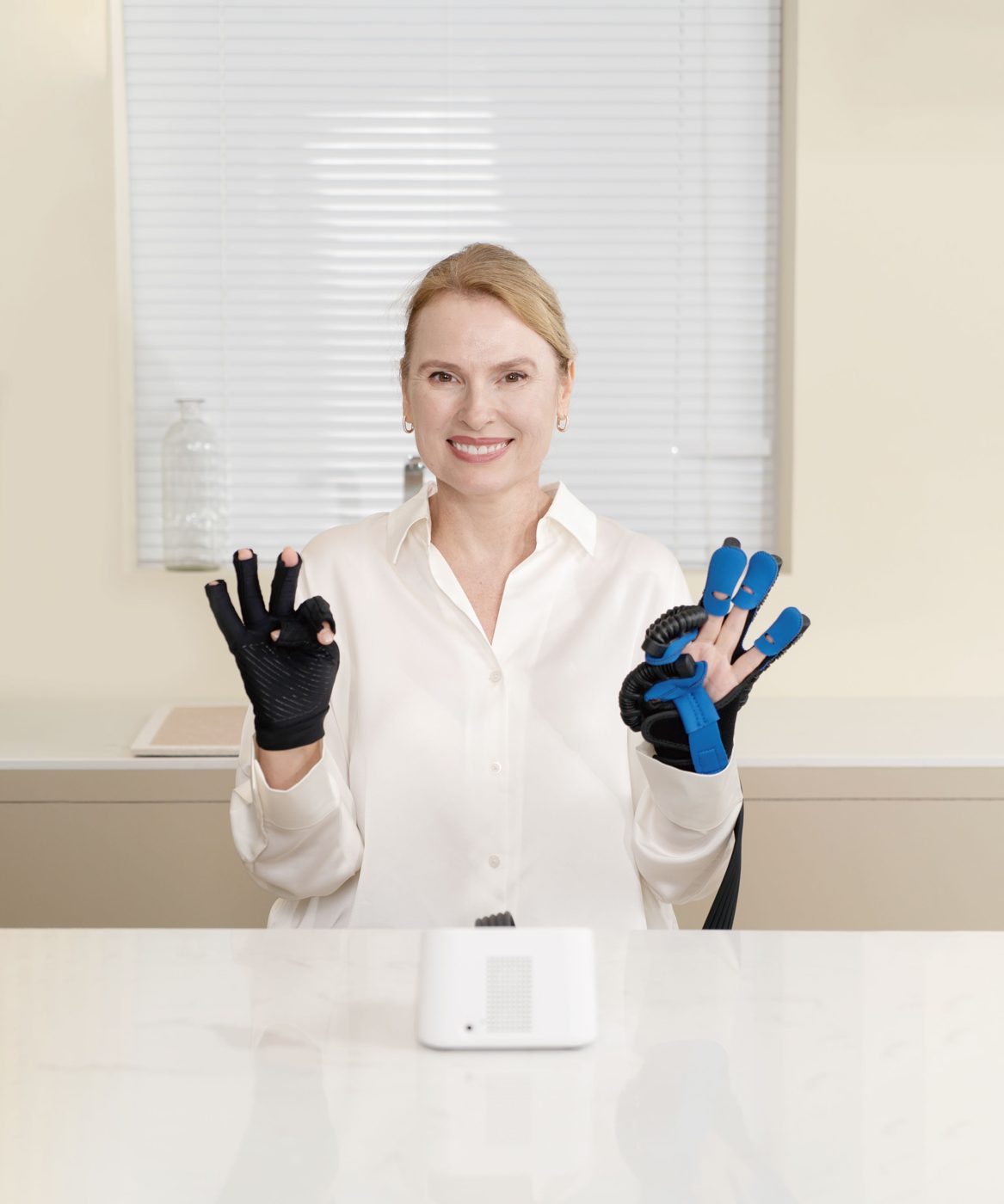
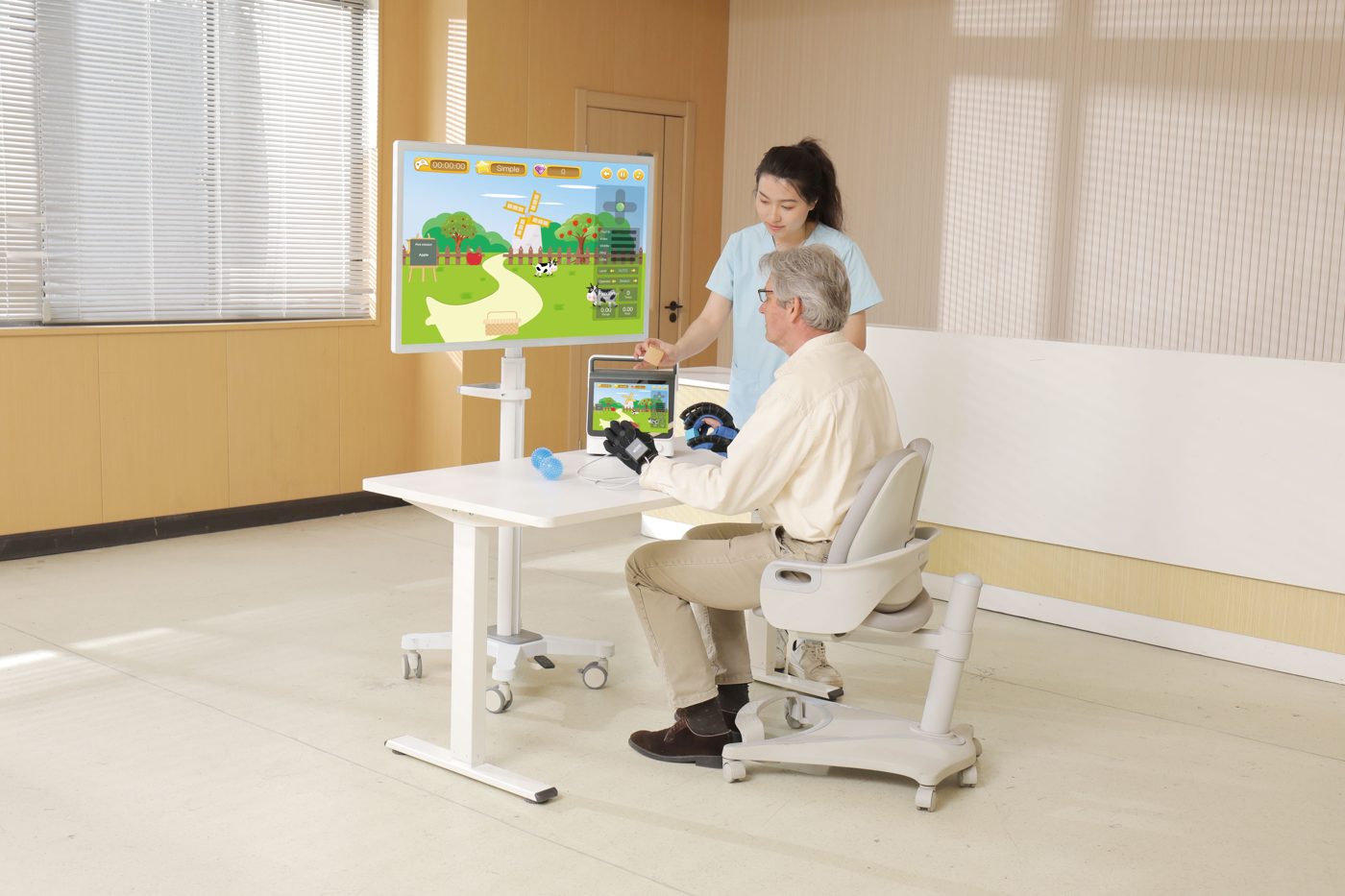
Robotic rehabilitation devices, including soft robotic gloves, are increasingly studied and used to deliver a large number of consistent, correct repetitions — something that is genuinely hard to achieve by hand, session after session. Research on robot-assisted therapy generally frames it as a way to amplify the dose of practice and support movement the hand cannot yet complete on its own, working alongside a therapist rather than replacing one.
Most real-world programs blend these approaches and change the blend over time. That is a feature, not a shortcoming: as the hand moves from flaccid to spastic to returning control, the treatment that fits it best changes too.
Because recovery varies so widely, it helps to understand the factors that influence it — without turning them into false promises or made-up percentages. Research and clinical experience point to several:
The honest summary: many people regain some hand function, and some regain a lot, but progress can be slow, uneven, and hard to predict — and not everyone recovers fully. Setting goals with your therapist, and celebrating incremental gains, tends to be more sustaining than expecting a single dramatic breakthrough.
One of the hardest practical problems in hand rehabilitation is volume. If the brain rewires around repetition, then the number of correct repetitions per day matters — and a therapy session a few times a week, on its own, may not supply enough. This is the gap that home rehabilitation technology is designed to help fill, between clinic visits.
Soft robotic rehabilitation gloves are built for exactly this. Running in a passive mode, a powered glove can gently open and close the fingers of a hand that cannot yet move on its own — delivering consistent flexion and extension in the flaccid stage, the phase that is otherwise the hardest to train. As some movement returns, a mirror-training mode lets the stronger hand lead while the affected hand follows, and later, task- and game-based modes keep the practice engaging enough to sustain the volume that recovery asks for. Devices such as the Syrebo hand rehabilitation glove and the game-based Syrebo E12E hand rehabilitation robot are designed around this idea — not as a replacement for professional therapy, but as a way to extend it into daily home practice. For clinics, our clinic rehabilitation systems and home rehabilitation equipment are built to hand off from hospital to home so the training dose never drops to zero.
Technology is a tool for delivering more of the right practice — it works best as part of a plan guided by your medical team, not instead of one.
Because outcomes depend so much on an accurate diagnosis and an early, tailored plan, professional assessment is not optional — it is the foundation of everything above. Speak with a physician or rehabilitation specialist:
A physiotherapist or occupational therapist can assess the hand, set realistic goals, and design the specific plan — including whether and how home devices fit — that gives it the best chance.
Often, recovery is possible, but it varies greatly from person to person. After a stroke, the muscles and nerves of the hand are usually intact — it is the brain's movement signals that were disrupted — so rehabilitation aims to help the brain build new pathways to the hand through a property called neuroplasticity. Many people regain some function, and some regain a great deal, but not everyone recovers fully. How much a hand recovers depends on the severity of the injury, how the recovery progresses, and the consistency of practice, so an individual outlook should always come from a clinician who has examined the hand.
There is no fixed timeline, and it differs for every person. Rehabilitation is often most active in the first weeks and months after the injury, but research shows the nervous system can keep changing well into the chronic phase, so gains are still possible later — sometimes when training is renewed or intensified. Rather than expecting a set schedule, most people and their therapists work toward steady, incremental progress over months, guided by regular reassessment.
There is no single best treatment; modern rehabilitation combines several studied approaches and adjusts the mix over time. Commonly used methods include high-repetition, task-oriented practice, mirror therapy, electrical stimulation, and robot-assisted training such as soft robotic gloves. The right combination depends on the cause of the paralysis and the current stage of the hand, which is why it should be designed and supervised by a qualified medical team.
A flaccid hand is limp with little or no muscle tone and is common in the earliest phase after a stroke; a spastic hand is tight, stiff, or clenched and resists being opened, and usually appears as signals begin returning to the muscles. Both can look like “paralysis,” but the emergence of tone is often a normal, expected sign that the nervous system is becoming more active. Treatment is matched to the stage — from passive movement in the flaccid stage to assisted and active practice as control returns.
Robotic rehabilitation gloves are studied and used to deliver a high number of consistent, correct repetitions, which is a central ingredient of motor recovery and hard to achieve by hand alone. In a passive mode they can move a hand that cannot yet move on its own; as movement returns, mirror and task-based modes support active practice. They are designed to extend professional therapy into daily home practice, not to replace it — the plan should still be guided by your medical team.
Tell us about the hand and where recovery stands now, and our team can suggest a rehabilitation approach to discuss with your therapist. Educational guidance, no obligation.
This article is for educational purposes only and is not a substitute for professional medical advice, diagnosis, or treatment. Every injury and every recovery is different — always follow the guidance of your physician and rehabilitation team.